


January 26, 2026
January 26, 2026

A high-performing website is not defined only by its interface, but by the system that powers it behind the scenes. Backend web development is the backbone of every modern web application, responsible for data processing, system logic, security, and scalability. For businesses, a well-built backend is what enables smooth user experiences, reliable operations, and long-term digital growth.
Whether you are launching a new product, optimizing an existing platform, or planning to scale, understanding backend web development helps you make smarter technical and business decisions. This guide provides a comprehensive overview of backend web development, covering key concepts, technologies, processes, and best practices tailored for modern businesses.
Backend web development refers to the server-side development of a web application, the part that users do not see but rely on every time they interact with a website or digital platform. It focuses on how data is processed, stored, and delivered, ensuring that the application functions correctly, securely, and efficiently behind the user interface.

At its core, backend web development is responsible for handling business logic, managing databases, and enabling communication between the frontend web development and external systems. Whenever a user logs in, submits a form, makes a payment, or retrieves information, the backend processes the request and returns the appropriate response in real time.
From a business perspective, backend web development is not just a technical layer, it is a strategic foundation. A well-architected backend allows companies to scale operations, integrate with third-party services, maintain data integrity, and adapt quickly to changing market demands. Without a reliable backend, even the most visually appealing website will struggle with performance, security, and long-term sustainability.
In modern web ecosystems, backend web development also plays a critical role in supporting APIs, cloud-based services, and distributed systems. This enables businesses to build flexible, future-ready applications that can grow alongside their users and operational needs.
Backend web development is built on several core components that work together to ensure a web application operates reliably, securely, and at scale. Understanding these components helps businesses make informed decisions when designing, developing, or upgrading their digital systems.
Server and Application Logic
The server is responsible for receiving requests from users, processing them, and sending back the appropriate responses. Application logic defines how the system behaves, handling workflows, enforcing business rules, and managing background processes. Well-structured server-side logic ensures consistent performance and enables applications to scale efficiently as user demand grows.
Databases and Data Management
Databases are the backbone of data storage and retrieval in backend web development. They store user information, transaction records, and application data in a structured and secure manner. Choosing the right database, whether relational or non-relational and designing efficient data models are essential for maintaining performance, data integrity, and long-term scalability.
APIs and System Integrations
APIs enable communication between the backend and frontend, as well as integration with third-party services such as payment gateways, analytics tools, and CRM systems. A well-designed API layer ensures seamless data exchange, improves system flexibility, and allows businesses to extend functionality without disrupting existing operations.
Authentication, Authorization, and Security
Security is a critical component of backend web development. Authentication verifies user identities, while authorization controls access to system resources. In addition, backend systems must protect sensitive data through encryption, secure communication protocols, and compliance with industry standards. Strong security practices help businesses build trust and reduce operational risk.
Infrastructure, Deployment, and Monitoring
Modern backend systems rely on cloud infrastructure to ensure availability, scalability, and reliability. Deployment pipelines automate the release of new features, while monitoring tools track performance, uptime, and potential issues in real time. Together, these elements enable businesses to maintain stable systems and respond quickly to changing requirements.
Backend web development relies on a wide range of technologies that determine how an application performs, scales, and integrates with other systems. Choosing the right technology stack is a strategic decision that directly impacts development speed, maintenance costs, and long-term business growth.
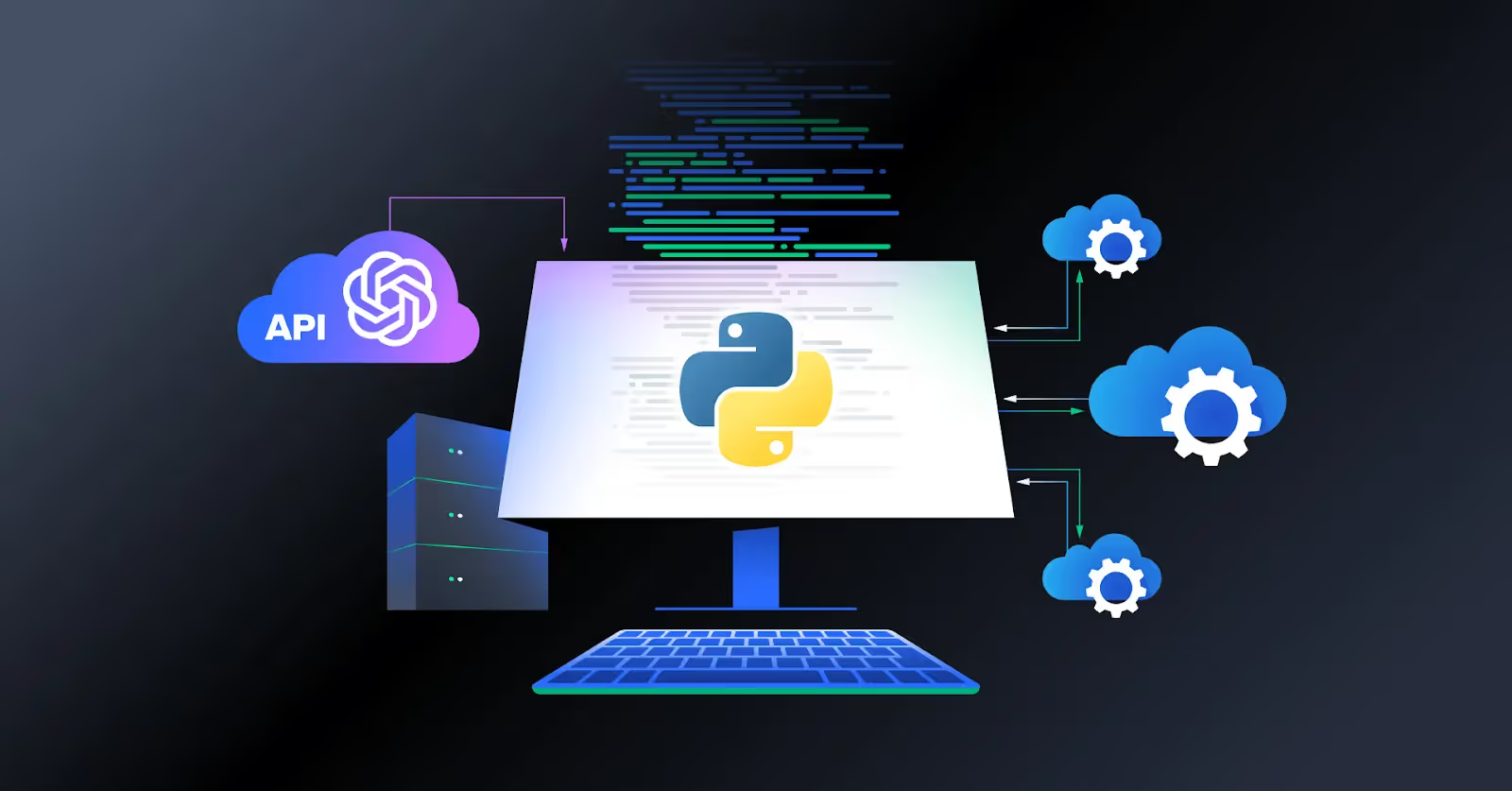
Several programming languages dominate modern backend web development, each offering unique advantages depending on project requirements and team expertise.
JavaScript, through Node.js, is widely used for building fast, scalable applications and real-time systems. Python is favored for its simplicity and flexibility, making it ideal for rapid development and data-driven applications. Java remains a strong choice for large-scale enterprise systems due to its stability and performance. PHP continues to power many content-driven platforms and business websites, particularly when paired with mature frameworks.
Selecting the right language depends on factors such as performance needs, ecosystem support, and the complexity of the application.
Frameworks streamline backend development by providing predefined structures, libraries, and best practices. Node.js frameworks like Express.js and NestJS are popular for building APIs and microservices. Python frameworks such as Django and Flask support both rapid development and highly customized systems. Laravel, a leading PHP framework, is known for its elegant syntax and strong community support, while Spring Boot is widely used for enterprise-grade Java applications.
Using the right framework helps teams maintain code quality, improve security, and accelerate development timelines.
Data storage is a core component of backend web development. Relational databases like MySQL and PostgreSQL are commonly used for structured data and transactional systems. NoSQL databases such as MongoDB and Redis are suitable for flexible data models, high-performance caching, and real-time applications.
Modern backend systems often combine multiple databases to balance performance, scalability, and data consistency.
Cloud platforms have become essential in backend web development, enabling businesses to deploy and scale applications with minimal infrastructure overhead. Cloud-based services support flexible computing resources, automated scaling, and high availability. This allows development teams to focus on building features rather than managing servers, while ensuring systems remain reliable as user demand grows.
APIs form the communication layer of backend systems, allowing seamless interaction between services and applications. DevOps tools and practices support automated testing, deployment, and monitoring, ensuring consistent delivery and system stability. Together, these technologies create a robust backend environment that supports continuous improvement and long-term business success.
Building a successful backend system is not just about writing code, it is a structured process that aligns technology with business objectives. A well-defined backend web development process helps businesses reduce risks, optimize performance, and ensure long-term scalability. Below is a proven approach that modern businesses follow to build reliable and future-ready backend systems.

Every effective backend project begins with a deep understanding of business goals. At this stage, development teams collaborate closely with stakeholders to identify functional requirements, user flows, data needs, and growth expectations. This ensures that technical decisions are driven by real business priorities rather than assumptions.
Clear documentation and technical planning at the beginning help prevent scope creep, reduce development costs, and create a shared vision for the entire project. When business and technology are aligned early, the backend becomes a strategic asset rather than a bottleneck.
Once requirements are defined, the next step is designing a solid backend architecture. This includes selecting the appropriate architecture model, defining service interactions, and planning data flows across the system. A well-designed architecture ensures stability, flexibility, and scalability as the business grows.
Database design plays a crucial role in this phase. Structuring data efficiently improves performance, enhances data security, and simplifies future integrations. Thoughtful architecture and database design lay the foundation for a backend that can adapt to evolving business needs.
With a clear blueprint in place, backend development moves into execution. This phase focuses on implementing business logic, building APIs, and integrating third-party services such as payment systems, analytics tools, or CRM platforms.
High-quality backend development emphasizes clean code, modular design, and performance optimization. Well-structured APIs enable seamless communication between the frontend and backend while allowing the system to expand without disrupting existing functionality.
Before deployment, rigorous testing ensures that the backend system performs reliably under real-world conditions. This includes functional testing, performance testing, and security assessments to identify vulnerabilities and potential bottlenecks.
Security measures such as authentication, authorization, and data protection are reinforced during this stage. Optimizing performance and addressing risks early helps businesses avoid costly downtime and protects both users and sensitive data.
The final stage involves deploying the backend system to a production environment and continuously monitoring its performance. Automated deployment pipelines streamline releases, while monitoring tools provide real-time insights into system health and user activity.
Backend development does not end at launch. Ongoing maintenance, performance tuning, and feature enhancements ensure that the system evolves alongside business demands. Continuous improvement keeps the backend resilient, secure, and ready for future growth.
A structured backend web development process empowers businesses to build systems that are not only functional but also scalable, secure, and aligned with long-term strategy. By following a clear, business-focused approach, organizations can transform backend development into a powerful driver of digital success.
Effective backend web development is built on best practices that ensure systems remain scalable, secure, and maintainable over time. Rather than focusing solely on short-term functionality, modern businesses benefit most from backend solutions designed with long-term performance and adaptability in mind.
One of the most important best practices is maintaining clean, well-structured code. Clear naming conventions, modular architecture, and consistent coding standards make backend systems easier to understand, maintain, and scale. This not only improves development efficiency but also reduces technical debt as applications grow in complexity.
Security-first development is another critical principle. Backend systems handle sensitive data, user authentication, and business logic, making them a primary target for vulnerabilities. Implementing strong authentication mechanisms, proper access controls, secure data handling, and regular security reviews helps protect both business operations and user trust.
Performance optimization should be integrated throughout the development process rather than treated as a final step. Efficient database queries, caching strategies, and optimized API responses ensure that backend systems can handle increasing traffic without compromising speed or reliability. A performant backend directly contributes to better user experiences and higher system stability.
Scalability and flexibility are equally essential. Designing backend systems that can adapt to changing business requirements, increased workloads, and new integrations allows organizations to grow without frequent reengineering. This includes choosing scalable architectures, leveraging cloud infrastructure, and preparing systems for future expansion.
Finally, thorough documentation and continuous monitoring play a vital role in long-term backend success. Clear documentation supports collaboration and future development, while monitoring tools provide insights into system performance and potential issues. Together, these practices enable businesses to maintain robust backend systems that evolve confidently alongside their digital strategies.
Choosing the right backend web development partner is a critical decision that directly impacts the performance, scalability, and long-term success of a digital product. For many businesses, backend development is not just a technical task but a strategic investment that must support growth, security, and operational efficiency over time.
One of the first considerations is whether to build an in-house team or work with an external development partner. While in-house teams offer direct control, they often require significant time and resources to recruit, train, and maintain. Outsourcing backend web development allows businesses to access specialized expertise, proven processes, and scalable resources without the overhead of long-term staffing.
A reliable backend development partner should demonstrate strong technical capabilities across modern technologies, architectures, and security practices. Beyond technical skills, it is equally important to evaluate the partner’s understanding of business requirements. Teams that can translate business goals into efficient backend systems are more likely to deliver solutions that support real-world operations rather than just functional code.
Communication, transparency, and collaboration are also essential factors. Clear workflows, regular updates, and proactive problem-solving help ensure that projects stay on track and adapt smoothly to changing needs. Additionally, long-term support and maintenance capabilities are key indicators of a partner’s commitment to sustainable development.
Ultimately, the right backend web development partner acts as a strategic extension of your business. By choosing a team that aligns technical expertise with business vision, organizations can build robust backend systems that not only meet current requirements but also enable future innovation and growth.
Conclusion
Backend web development is more than a technical requirement, it is the foundation that enables modern businesses to operate efficiently, scale confidently, and innovate continuously. A well-designed backend system connects data, logic, and infrastructure into a reliable engine that supports seamless user experiences and sustainable growth.
By understanding core backend concepts, technologies, development processes, and best practices, businesses are better equipped to make informed decisions and avoid costly technical pitfalls. Investing in a strong backend from the start not only improves performance and security but also creates the flexibility needed to adapt in an ever-evolving digital landscape.