


March 6, 2026
March 6, 2026
Enterprise systems are no longer just operational tools, they are the backbone of business performance. Solutions from Cegid power critical functions across retail, finance, HR, and ERP environments, making system stability, security, and performance absolutely essential. Yet even the most advanced platforms require expert technical oversight to ensure seamless integration, optimal functionality, and uninterrupted operations.
This is where Cegid technical support becomes a strategic asset rather than merely a reactive service. From minimizing costly downtime and protecting sensitive data to optimizing system efficiency and scalability, professional support plays a critical role in maximizing long-term ROI. In this comprehensive guide, we break down everything businesses need to know about Cegid technical support, including its scope, key benefits, common technical challenges, and how to choose the right support model for sustainable growth.
Cegid is a global enterprise software provider specializing in cloud-based solutions for retail, finance, human resources, and ERP management. Its platforms are widely adopted by mid-sized and large enterprises seeking scalable, integrated systems to manage complex business operations. From point-of-sale ecosystems to financial reporting infrastructures, Cegid solutions often serve as mission-critical systems that directly impact revenue, compliance, and customer experience.
Because these systems operate at the core of daily business activities, even minor technical disruptions can cause significant operational setbacks. This makes structured, professional technical support essential rather than optional.
Cegid technical support refers to the specialized IT services designed to maintain, troubleshoot, optimize, and secure Cegid software environments. It focuses on the technical infrastructure behind the platform rather than functional business consulting.
In practical terms, Cegid technical support typically includes:
Unlike functional support, which focuses on how users operate the system, technical support addresses the underlying architecture, infrastructure, and code-level challenges that keep the platform running smoothly.
Professional Cegid technical support is often structured into tiered levels to ensure efficiency and specialization:
Modern Cegid technical support is not just reactive troubleshooting. It is increasingly proactive and strategic. Businesses rely on support teams to:
In this context, Cegid technical support becomes a long-term operational safeguard, ensuring stability, efficiency, and business continuity across the entire enterprise ecosystem.
Enterprise systems powered by Cegid often sit at the center of daily operations, from retail transactions and financial reporting to HR management and supply chain coordination. When these systems experience disruption, the impact is rarely isolated. It cascades across departments, affects customer experience, and directly influences revenue. This is why Cegid technical support is not simply an IT function, but a critical business safeguard.
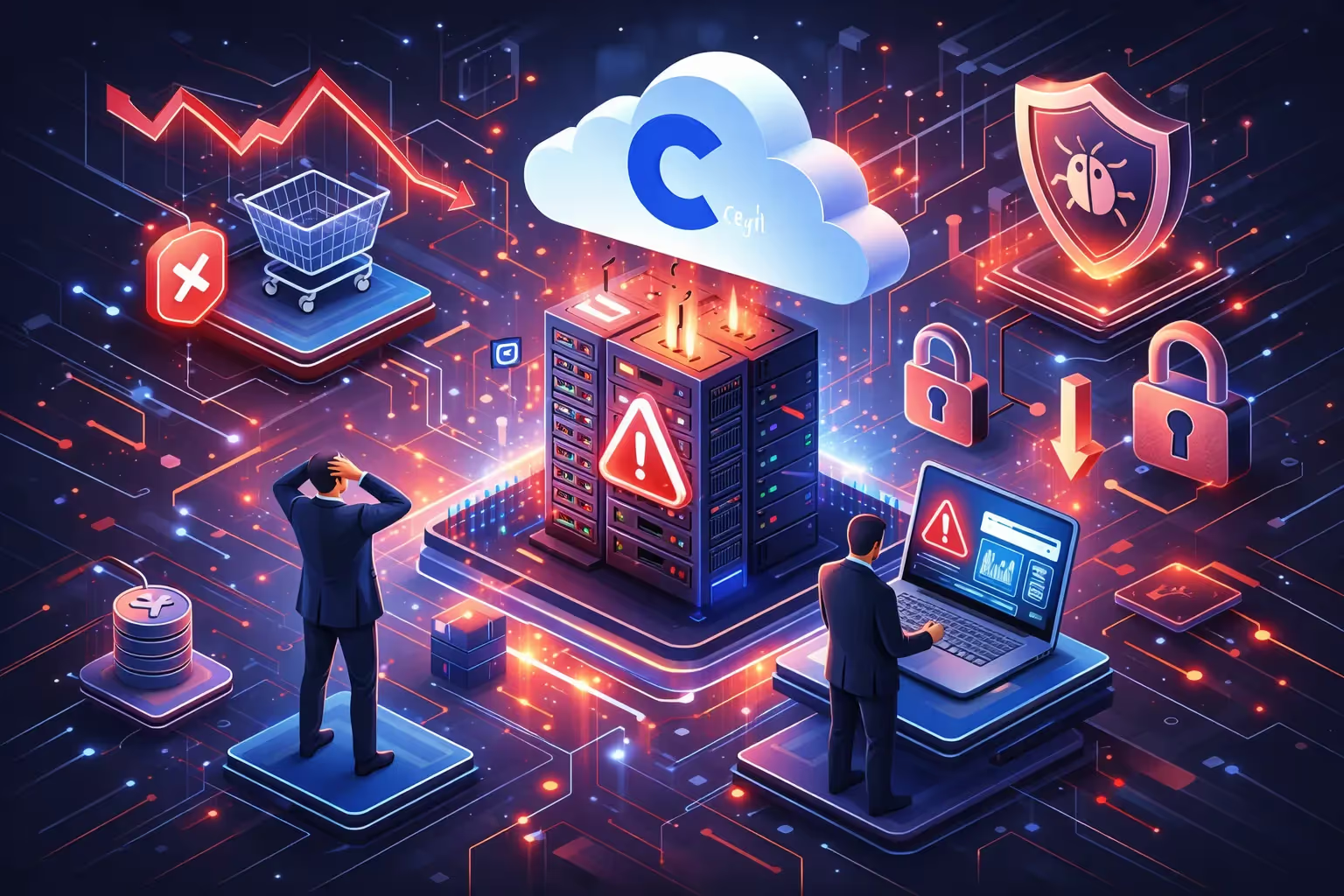
One of the most immediate risks businesses face without proper technical support is system downtime. Even a short interruption in ERP or retail systems can halt sales transactions, delay reporting, disrupt inventory updates, and create operational confusion. For retail-driven organizations, downtime during peak hours can translate into measurable revenue loss and long-term reputational damage. Reliable technical support ensures rapid incident response and structured escalation processes to minimize disruption.
Data integrity and security represent another major concern. Cegid environments typically manage sensitive financial records, employee information, customer data, and transactional history. Without proactive monitoring and expert technical oversight, vulnerabilities can go unnoticed, increasing exposure to data corruption, integration errors, or cybersecurity threats. Professional support helps maintain system stability, enforce security standards, and ensure compliance with evolving data protection requirements.
Performance optimization is equally critical. As businesses scale, transaction volumes increase, integrations expand, and system complexity grows. Without continuous monitoring, databases may become overloaded, response times may slow, and integrations may begin to fail under pressure. Technical support teams play a proactive role in performance tuning, system configuration adjustments, and infrastructure optimization to ensure that the platform evolves alongside business growth.
Additionally, upgrades and patches require careful handling. ERP and enterprise systems must stay current to maintain security, compatibility, and functionality. However, version migrations and updates can introduce unexpected conflicts if not managed by experienced engineers. Structured Cegid technical support ensures that updates are tested, deployed, and validated properly, reducing the risk of operational instability.
Ultimately, Cegid technical support protects more than software, it protects business continuity. By reducing operational risks, strengthening security, and optimizing system performance, professional support enables organizations to focus on strategy and growth rather than troubleshooting technical disruptions.
Even well-configured enterprise systems can encounter technical challenges as businesses grow, integrate new tools, or expand across regions. In environments powered by Cegid, technical complexity increases over time, making professional support essential to maintain stability and performance.
Below are some of the most common issues that require expert Cegid technical support intervention:
While these issues may vary in complexity, they share one common trait: they can escalate quickly if not addressed by experienced technical professionals. Proactive Cegid technical support not only resolves these challenges efficiently but also prevents recurring disruptions, ensuring the system remains stable, secure, and fully aligned with business growth objectives.
Not all businesses require the same level of technical assistance. The scope of Cegid technical support can vary depending on system complexity, operational scale, and strategic goals. Understanding the different service models helps organizations choose the right approach for stability, scalability, and long-term performance.
On-demand support is the most basic and commonly used model. Businesses submit tickets when issues arise, and technical engineers respond based on defined service-level agreements (SLAs).
This model typically includes remote troubleshooting, issue diagnosis, system error resolution, and limited configuration assistance. It is suitable for organizations with stable environments that experience occasional, non-critical technical issues.
However, because this approach is largely reactive, it focuses on fixing problems after they occur rather than preventing them. While cost-effective in the short term, it may not fully address deeper performance optimization or long-term infrastructure improvements. For businesses with moderate system complexity, this model serves as a foundational layer of protection.
A dedicated support model assigns a specialized team of engineers who understand the company’s Cegid environment in depth. Instead of handling isolated tickets, this team becomes familiar with the system architecture, integrations, customizations, and operational workflows.
This approach enables faster incident resolution, proactive monitoring, and strategic technical recommendations. Because engineers have contextual knowledge of the business, they can anticipate risks, optimize configurations, and align technical performance with operational goals.
Dedicated support is particularly valuable for enterprises with complex ERP ecosystems or multi-location retail operations. It transforms support from a reactive function into an ongoing technical partnership.
For organizations operating across time zones or in high-transaction industries, continuous system availability is critical. A 24/7 managed support model provides around-the-clock monitoring, rapid incident response, and proactive system health management.
This service often includes:
The primary advantage is minimized downtime risk. Instead of waiting for users to report problems, monitoring tools and technical teams detect irregularities early and intervene before disruptions escalate.
For retail, finance, and multinational enterprises using solutions from Cegid, 24/7 support ensures operational continuity and protects revenue streams at all times.
Beyond incident resolution, some support providers focus on continuous improvement. This model emphasizes performance tuning, database optimization, infrastructure scaling, and upgrade planning.
Rather than asking “How do we fix this issue?”, proactive support asks “How do we prevent the next one?”
Services may include:
This approach is particularly beneficial for growing businesses that expect increased transaction volumes and expanding integrations. It ensures the Cegid environment evolves alongside organizational growth instead of becoming a bottleneck.
Companies must also decide whether to build an internal support team or outsource to specialized IT consulting firms.
In-house teams offer direct control and internal alignment but may face limitations in expertise depth, scalability, and cost efficiency, especially when dealing with advanced integrations or complex migrations.
Outsourced Cegid technical support provides access to certified specialists, broader industry experience, and scalable service models. External providers often bring structured SLAs, advanced monitoring tools, and cross-industry insights that internal teams may lack.
For many organizations, a hybrid model, combining internal IT oversight with external expert support, delivers the most balanced and resilient solution.
Selecting the appropriate Cegid technical support model is not just an operational decision; it is a strategic one. The right service structure ensures system reliability, protects data integrity, and supports sustainable growth. Whether businesses opt for reactive assistance, a dedicated team, or full-scale managed services, the goal remains the same: maintaining a secure, optimized, and future-ready Cegid environment that drives business performance rather than limiting it.
As Cegid environments grow more complex, many organizations realize that technical support alone is not enough. Beyond troubleshooting incidents and maintaining system uptime, businesses need strategic guidance, architectural expertise, and long-term optimization planning. This is where professional IT consulting firms play a critical role.
First, consulting firms bring deep technical specialization. Enterprise platforms such as those provided by Cegid often involve multi-layered integrations, cloud infrastructure configurations, security frameworks, and custom developments. Professional IT consultants work across industries and projects, giving them broader exposure to complex scenarios that internal teams may encounter only occasionally. This depth of expertise significantly reduces risk during migrations, upgrades, and system expansions.
Second, businesses benefit from objective, strategic oversight. Internal IT teams are typically focused on day-to-day operations, leaving limited time for performance audits, scalability planning, or infrastructure redesign. External consulting firms provide an independent evaluation of system health, identify hidden inefficiencies, and recommend improvements aligned with long-term business goals rather than short-term fixes.
Another key advantage is scalability and resource flexibility. Hiring and training a full in-house team with advanced ERP expertise can be costly and time-consuming. Partnering with a consulting firm allows organizations to scale technical resources up or down depending on project demands, whether it is a large-scale rollout, a system optimization phase, or a critical incident requiring senior-level engineers.
Professional firms also strengthen risk management and compliance readiness. With increasing cybersecurity threats and evolving data protection regulations, structured governance and proactive monitoring are no longer optional. Experienced IT consultants implement best practices in security hardening, patch management, and system documentation, reducing operational vulnerabilities.
Finally, collaboration with a trusted consulting partner supports continuous improvement rather than reactive maintenance. Instead of engaging support only when issues arise, businesses can adopt a proactive model that emphasizes system performance, resilience, and innovation.
Firms like Serdao typically position themselves not merely as service providers, but as long-term technical support partners. By combining structured support frameworks with strategic IT advisory capabilities, they help organizations maximize the value of their Cegid investments while maintaining operational stability and future-ready infrastructure.
Ultimately, partnering with a professional IT consulting firm enables businesses to shift their focus from managing technical complexity to driving growth, with the confidence that their enterprise systems are secure, optimized, and aligned with strategic objectives.
Conclusion
Cegid systems are powerful enablers of operational excellence, but their true value depends on stability, performance, and expert technical oversight. From minimizing downtime and safeguarding critical data to optimizing integrations and supporting scalable growth, Cegid technical support is not simply an IT function; it is a strategic pillar of business continuity.
As enterprise environments become more interconnected and digitally driven, reactive troubleshooting is no longer sufficient. Businesses that invest in structured, proactive support models position themselves to reduce risk, improve efficiency, and maximize ROI from their ERP and retail ecosystems. Whether through dedicated teams, managed services, or collaboration with experienced IT consulting partners, the goal remains the same: ensuring that technology consistently supports rather than slows business momentum.