


May 27, 2026
May 27, 2026
Outsourcing software development helps businesses accelerate innovation, reduce operational costs, and access global tech talent, but it also introduces one of the biggest concerns in today’s digital landscape: data security. From sensitive customer information and proprietary source code to compliance requirements and intellectual property, a single security weakness can result in financial losses and serious reputational damage.
As cyber threats continue to evolve, companies can no longer treat security as a secondary priority. This article explores the most critical data security risks in software development outsourcing and highlights the best strategies businesses can use to build secure, reliable, and future ready outsourcing partnerships.
Software development outsourcing has become a strategic solution for businesses looking to reduce costs, accelerate product delivery, and gain access to specialized technical expertise. From startups building their first MVP to global enterprises scaling digital products, outsourcing allows companies to stay competitive in a fast moving market. However, alongside these advantages comes a critical responsibility: protecting sensitive business and customer data throughout the development process.
When companies outsource software development, they often share confidential assets with external teams. This may include customer databases, internal systems, financial information, API credentials, source code, product roadmaps, and proprietary business logic. Without strong security measures, this information can become vulnerable to cyberattacks, unauthorized access, or accidental leaks.
Modern businesses increasingly rely on outsourcing partners to support digital transformation initiatives and software innovation. Outsourcing models such as offshore development, nearshore teams, and dedicated development centers allow organizations to scale efficiently while reducing hiring and operational expenses.
As outsourced teams become more deeply involved in core business operations, they gain access to highly sensitive systems and infrastructure. This expanded access creates additional security challenges, especially when development teams operate across multiple countries, networks, and compliance environments.
Businesses must ensure that their outsourcing partners follow strict security standards, maintain transparent workflows, and implement secure development practices from the beginning of every project.
In software development outsourcing, data is not limited to customer information alone. Development teams may also handle intellectual property, internal documentation, software architecture, authentication systems, and confidential product strategies.
Some of the most sensitive assets commonly shared with outsourcing teams include:
If this data is exposed or stolen, businesses may face serious consequences that extend far beyond technical disruption.
A data breach can have devastating effects on a company’s operations and reputation. Cybersecurity incidents often result in direct financial losses, legal penalties, customer distrust, and long term brand damage.
For example, if sensitive customer information is leaked during an outsourced development project, the company responsible may face:
In highly regulated industries such as healthcare, fintech, and eCommerce, the consequences can be even more severe due to strict compliance requirements like GDPR, HIPAA, or PCI DSS.
Cyber threats targeting outsourced development environments are becoming increasingly sophisticated. Attackers often exploit weak access controls, insecure communication channels, outdated software dependencies, or human error within distributed teams.
Some of the most common security threats in outsourced software development include:
Because outsourcing typically involves remote collaboration and third party access, companies must proactively strengthen security across every stage of the software development lifecycle.
Data security is not only a technical requirement but also a key factor in building trust with customers, investors, and business partners. Companies that prioritize secure outsourcing practices demonstrate professionalism, reliability, and commitment to protecting sensitive information.
A strong security strategy helps businesses:
As software outsourcing continues to grow globally, businesses that integrate security into every stage of development will be better positioned for sustainable and long term success.
Outsourcing software development can help businesses grow faster, but it also introduces security risks that should never be overlooked. When external teams gain access to sensitive systems and data, even a small security gap can lead to major business consequences.
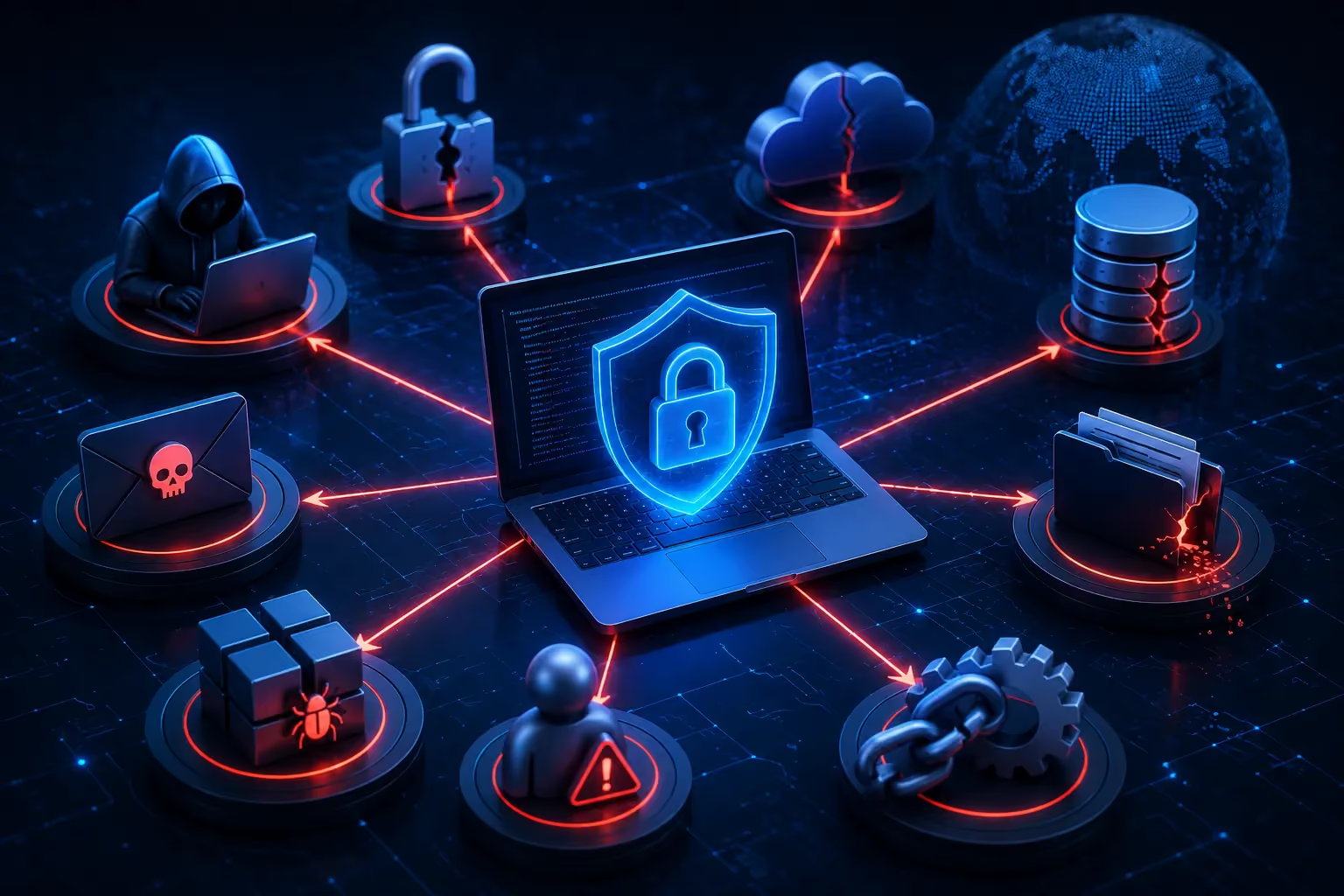
Here are some of the most common risks companies face when outsourcing software development:
Understanding these risks allows businesses to build stronger security strategies and create safer outsourcing partnerships for long term success.
The level of security in software development outsourcing depends on more than just technology. A company’s outsourcing strategy, vendor selection process, and internal security standards all play an important role in protecting sensitive data. Below are some key factors that can directly impact outsourcing security:
By understanding these factors, businesses can make smarter outsourcing decisions and create a more secure software development environment from the start.
Protecting sensitive data in outsourced software projects requires more than basic cybersecurity tools. Businesses need a proactive security strategy that covers people, processes, technology, and legal protection. By implementing the right practices from the beginning, companies can significantly reduce risks while building long term trust with outsourcing partners.
One of the biggest mistakes companies make is focusing on development speed before establishing clear security standards. A secure outsourcing partnership should begin with careful planning and strict vendor evaluation.
Before signing any agreement, businesses should thoroughly assess the outsourcing provider’s security capabilities. This includes reviewing their security certifications, development workflows, compliance standards, and history of handling sensitive projects. Vendors with certifications such as ISO 27001 or SOC 2 often demonstrate stronger security maturity and operational reliability.
Legal agreements also play a critical role in protecting business assets. Companies should always establish:
In addition, organizations should apply strict access control policies from day one. Developers should only have access to the systems and data necessary for their specific tasks. Security measures such as multi factor authentication, password management policies, and role based access control can greatly reduce the risk of unauthorized access.
Security should never be treated as a final step before deployment. Instead, it must become part of the entire software development lifecycle.
Outsourcing teams should follow secure coding standards and perform regular code reviews to identify vulnerabilities early. Businesses can further strengthen protection by adopting DevSecOps practices, which integrate automated security checks directly into development and deployment pipelines.
Some essential security measures include:
Encryption is another essential layer of protection. Sensitive data should always be encrypted both during transmission and while stored in databases or cloud systems. Using secure communication tools and private collaboration platforms also helps prevent data leaks during remote teamwork.
Regular employee cybersecurity training is equally important. Even advanced security systems can fail if team members are not aware of phishing attacks, credential theft risks, or unsafe online behavior.
No system is completely immune to cyber threats, which is why businesses should always have an incident response plan in place. Fast response times can significantly reduce the financial and operational impact of a security breach.
A strong incident response strategy should include:
Transparency between the client and outsourcing partner is also essential during security incidents. Both sides should maintain open communication channels and provide immediate updates if suspicious activity or vulnerabilities are detected.
Companies that prioritize security throughout the outsourcing process are far more likely to protect their sensitive data, maintain customer trust, and achieve sustainable long term growth. In today’s digital landscape, secure software outsourcing is no longer optional. It is a critical part of building reliable and future ready technology solutions.
Choosing the right outsourcing partner is not only about development costs or technical skills. Businesses should also evaluate how well a vendor protects sensitive data and manages cybersecurity risks throughout the development process.
A reliable outsourcing company should follow secure development practices, use protected infrastructure, and maintain transparent communication. Businesses should also review the vendor’s security certifications, compliance standards, and experience handling sensitive projects. Strong legal agreements such as NDAs and intellectual property clauses are equally important to protect confidential business information.
It is also essential to work with teams that integrate security into every stage of development through secure coding standards, regular testing, and continuous monitoring. Vendors that follow DevSecOps practices are often better prepared to identify and prevent vulnerabilities early.
For businesses seeking a trusted technology partner, Serdao combines software development expertise with a security first mindset, helping companies build scalable digital solutions while maintaining strong data protection standards.
Conclusion
As businesses continue to embrace software development outsourcing to accelerate growth and innovation, data security has become a critical factor that can no longer be overlooked. From protecting sensitive customer information to securing proprietary source code and maintaining regulatory compliance, every stage of the outsourcing process requires a strong security mindset.
The good news is that outsourcing can still deliver exceptional value when businesses choose the right technology partner and implement the proper security strategies from the start. By prioritizing secure development practices, transparent collaboration, and proactive risk management, companies can confidently scale their digital products without compromising data protection.