


July 6, 2026
July 6, 2026
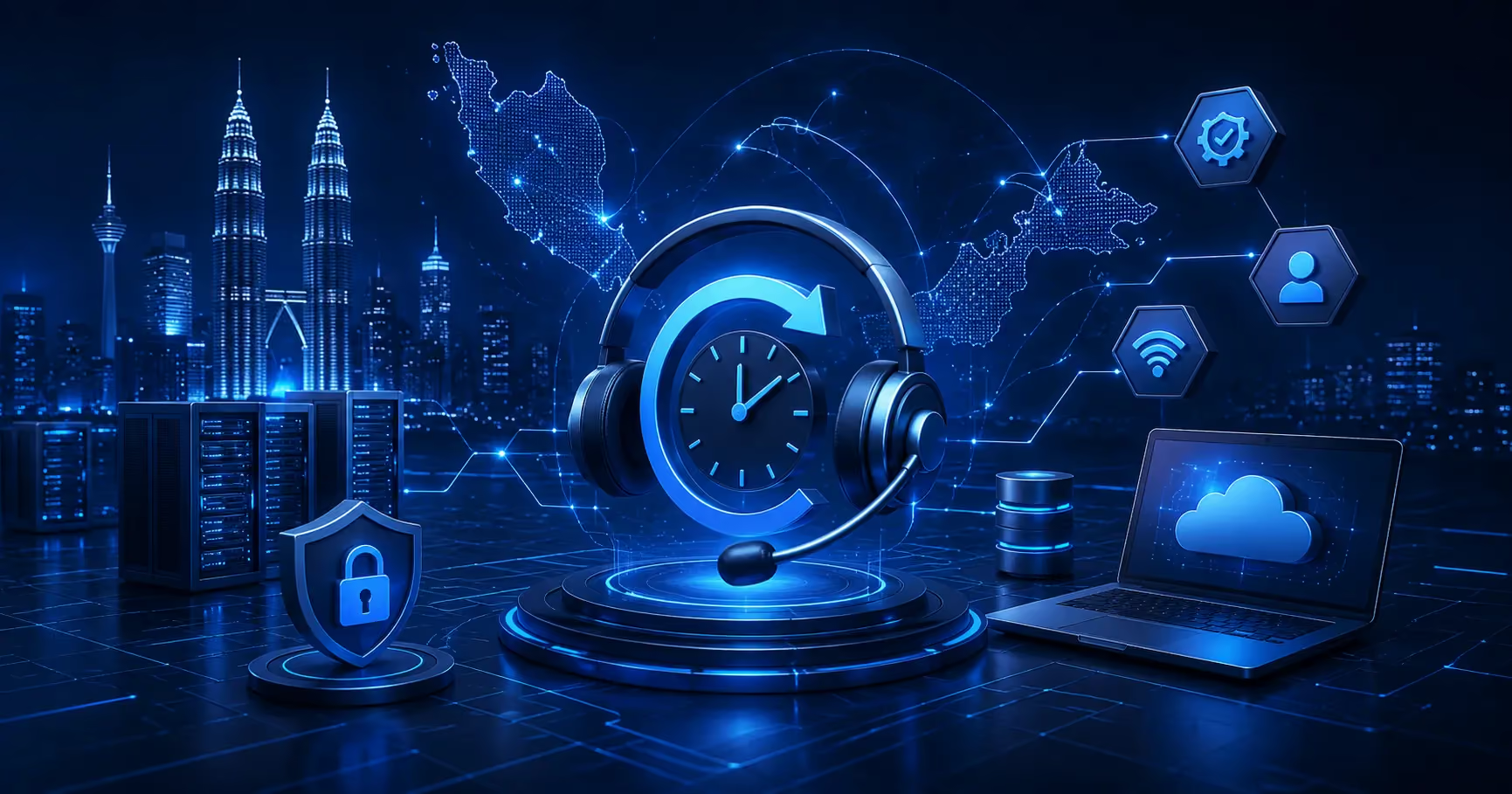
Every minute of downtime can cost a business more than just lost revenue. It can disrupt operations, frustrate customers, reduce employee productivity, and damage a company’s reputation. As Malaysian businesses become increasingly dependent on cloud platforms, digital tools, and always-on customer services, even a brief IT disruption can have far-reaching consequences.
This is where a 24/7 IT Helpdesk becomes a critical business asset. Rather than waiting for issues to escalate into costly outages, round-the-clock IT support enables organizations to detect problems early, respond faster, and maintain uninterrupted operations. In this article, we explore how a 24/7 IT Helpdesk helps Malaysian businesses reduce downtime, improve business continuity, and stay competitive in an increasingly digital marketplace.
A 24/7 IT Helpdesk is a dedicated IT support service that provides round-the-clock assistance, monitoring, and incident management for an organization's technology infrastructure. Unlike traditional IT support teams that operate only during standard business hours, a 24/7 helpdesk ensures that technical issues are addressed whenever they arise, helping businesses maintain uninterrupted operations.
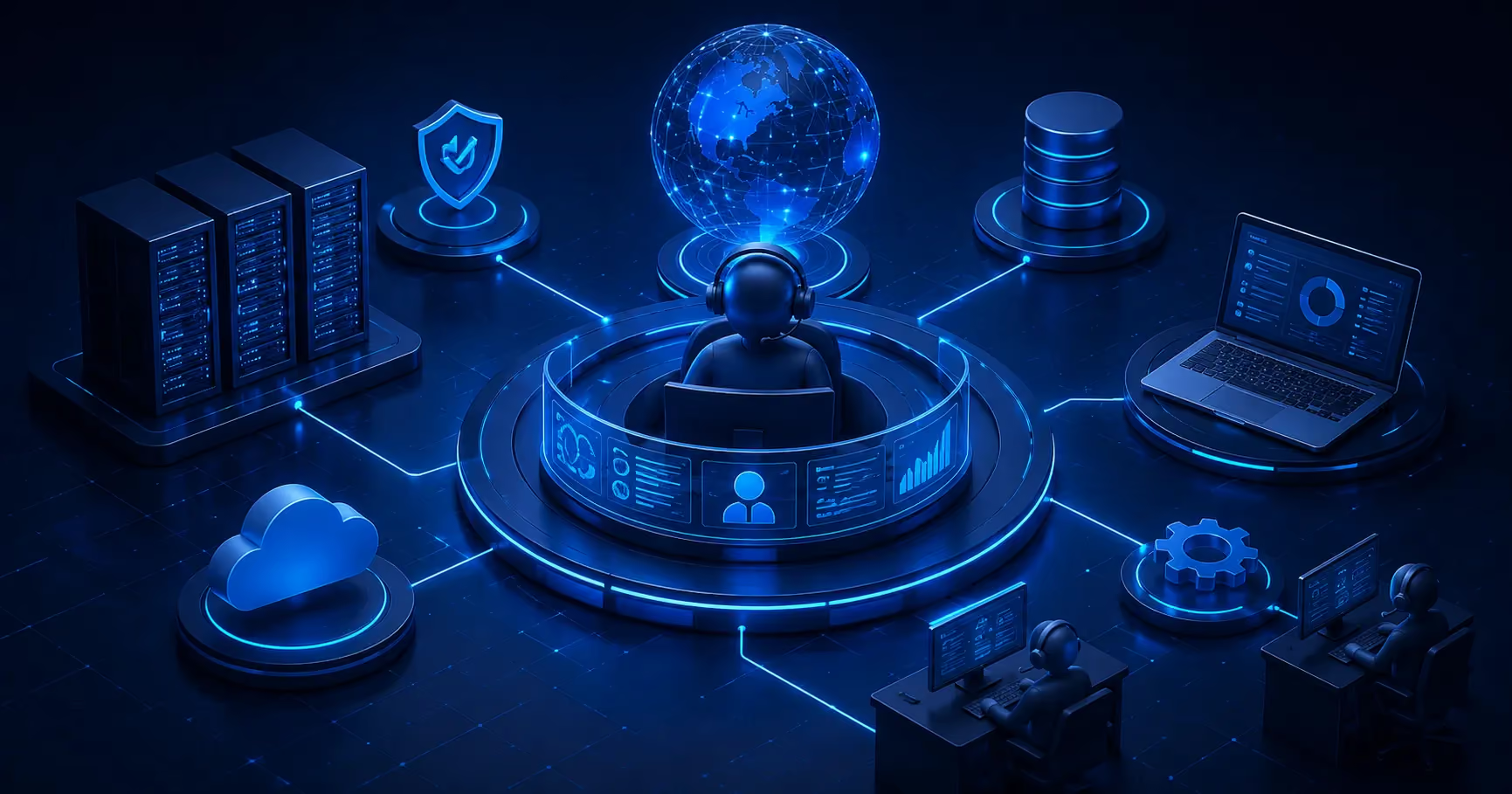
A 24/7 IT Helpdesk serves as the central point of contact for all IT-related issues, requests, and incidents. Its primary goal is to keep business systems running smoothly while providing users with timely technical assistance.
Key functions typically include:
1. Incident Detection and Resolution
One of the most important responsibilities of a 24/7 IT Helpdesk is identifying and resolving technical incidents as quickly as possible. Whether it is a server failure, software crash, connectivity issue, or application error, support teams work to diagnose the problem, determine its impact, and implement a solution before it causes significant disruption.
By providing immediate assistance, businesses can reduce downtime and prevent minor issues from developing into major operational problems.
2. Continuous System Monitoring
Modern helpdesk services often include proactive monitoring of critical IT infrastructure, including:
Continuous monitoring allows support teams to detect unusual activity, performance degradation, or potential failures before users are even aware of a problem.
3. End-User Technical Support
Employees frequently encounter technology-related challenges that can affect their ability to work efficiently. A 24/7 IT Helpdesk provides support for issues such as:
This ensures employees can quickly return to work without experiencing prolonged disruptions.
4. Ticket Management and Escalation
Every support request is logged, tracked, and prioritized through a ticketing system. Helpdesk Support teams categorize incidents based on urgency and business impact, ensuring critical issues receive immediate attention.
When specialized expertise is required, tickets can be escalated to higher-level engineers or cybersecurity specialists, helping organizations resolve complex problems more efficiently.
5. Cybersecurity Support
As cyber threats continue to increase, many 24/7 IT Helpdesk providers play an active role in security monitoring and incident response. They can help detect suspicious activities, investigate alerts, coordinate containment efforts, and support recovery procedures following a security incident.
This rapid response capability can significantly reduce the impact of cyberattacks and security-related downtime.
For many Malaysian businesses, downtime is more than just a temporary technical issue. Even a short disruption can affect revenue, productivity, customer satisfaction, and overall business performance. As organizations become increasingly reliant on digital systems, the financial and operational impact of downtime continues to grow.

Revenue Loss and Operational Disruption
When critical systems become unavailable, business operations can quickly come to a standstill. Employees may be unable to access applications, process transactions, communicate with customers, or complete daily tasks.
For businesses that rely on online sales, digital services, or real-time operations, every minute of downtime can translate directly into lost revenue and missed opportunities.
Customer Experience and Reputation Damage
Customers expect fast, reliable, and uninterrupted service. When websites, applications, or support channels become unavailable, customers may experience frustration and lose confidence in the business.
Repeated outages can damage a company's reputation and encourage customers to seek alternatives from competitors.
Compliance and Security Risks
Downtime can also increase security and compliance risks. System failures may delay the detection of cyber threats, disrupt data protection processes, or affect the availability of critical records.
For businesses operating in regulated industries, prolonged outages can lead to compliance challenges and additional operational risks, making rapid incident response more important than ever.
Business downtime rarely happens without warning. In most cases, outages stem from a combination of technical failures, security incidents, and human mistakes that gradually disrupt critical systems. Understanding the most common causes can help organizations take proactive measures before small issues turn into costly interruptions.
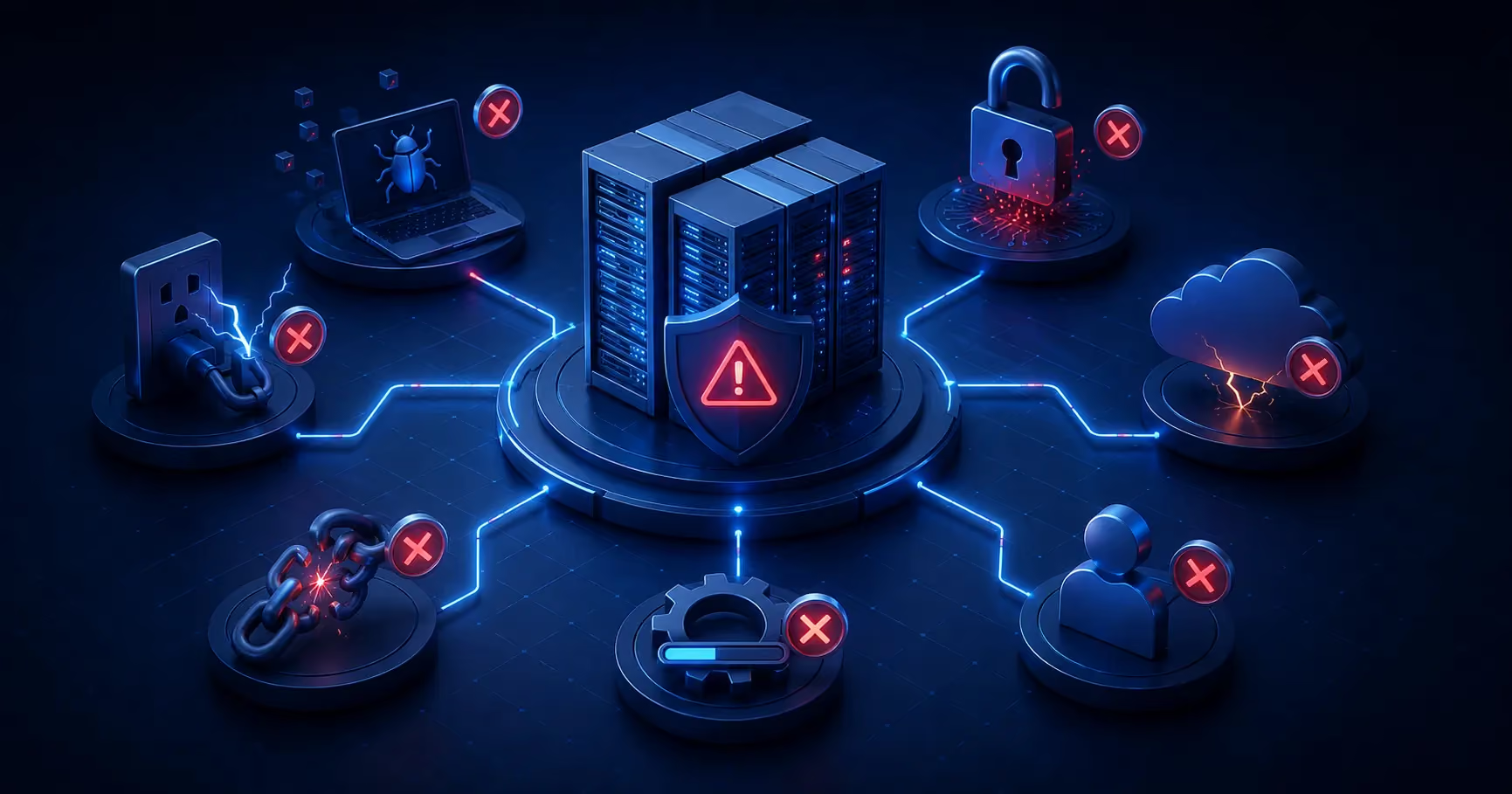
Hardware Failures
Even the most reliable equipment has a limited lifespan. When critical hardware components fail, entire business operations can be affected.
Software and Application Problems
Modern businesses rely on numerous software platforms working together seamlessly. When one system encounters an issue, the effects can quickly spread.
Cybersecurity Incidents
Cyber threats have become one of the leading causes of unplanned downtime for businesses worldwide.
Human Errors
Despite advances in technology, human mistakes remain a common source of IT disruptions.
Third-Party Service Outages
Many businesses depend on external providers for cloud services, internet connectivity, payment processing, and software platforms.
While some downtime events are unavoidable, many can be prevented or resolved much faster with the right support strategy in place. This is where a 24/7 IT Helpdesk becomes invaluable, providing continuous monitoring, rapid response, and proactive maintenance to minimize disruptions before they significantly impact the business.
The difference between a minor IT issue and a major business disruption often comes down to one factor: how quickly the problem is identified and resolved. Without continuous support, even a small technical issue can escalate into hours of downtime, lost productivity, and frustrated customers.
A 24/7 IT Helpdesk helps businesses stay ahead of potential disruptions by combining proactive monitoring, rapid response, and around-the-clock technical expertise. Here are the key ways it minimizes downtime and keeps operations running smoothly.
One of the biggest advantages of a 24/7 IT Helpdesk is continuous monitoring of business-critical systems. Rather than waiting for employees or customers to report a problem, support teams can identify warning signs early and take action before operations are affected.
This proactive approach helps organizations:
By catching problems early, businesses can avoid many disruptions that would otherwise result in costly downtime.
When an outage happens, every minute matters. Delayed responses can lead to lost revenue, interrupted workflows, and increased recovery costs.
A 24/7 IT Helpdesk ensures that qualified technicians are available at all times to respond to incidents as soon as they arise. Whether the issue occurs during business hours, late at night, or over a public holiday, support teams can begin troubleshooting immediately.
This significantly reduces:
The faster an issue is addressed, the less impact it has on the organization.
Not every IT issue can be solved by frontline support staff. Some incidents require specialized expertise in networking, cloud infrastructure, cybersecurity, or enterprise applications.
A well-managed 24/7 IT Helpdesk follows established escalation procedures that ensure critical issues reach the right specialists without unnecessary delays.
Benefits of structured escalation include:
This streamlined process helps organizations recover more efficiently from both routine and high-priority incidents.
Many downtime events are caused by issues that build up over time, such as outdated software, overloaded systems, or aging infrastructure.
A 24/7 IT Helpdesk does more than react to problems. It continuously works to prevent them through proactive maintenance activities, including:
Regular maintenance reduces the likelihood of unexpected failures and helps create a more stable IT environment.
Cybersecurity incidents are among the most disruptive causes of downtime. A ransomware attack, compromised account, or malware infection can bring critical business operations to a halt within minutes.
A 24/7 IT Helpdesk plays a vital role in minimizing security-related downtime by providing continuous monitoring and rapid incident response.
Support teams can:
By acting immediately, businesses can contain threats faster and reduce the operational impact of cybersecurity incidents.
Today's workforce is no longer confined to a single office location. Employees often work remotely, travel frequently, or collaborate across different time zones.
When technical issues prevent employees from accessing systems, productivity can quickly suffer. A 24/7 IT Helpdesk ensures users always have access to support regardless of where or when they are working.
This enables organizations to:
As businesses become increasingly dependent on technology, downtime prevention requires more than occasional technical support. A 24/7 IT Helpdesk provides the continuous monitoring, rapid response, proactive maintenance, and cybersecurity expertise needed to keep critical systems available around the clock. By reducing disruptions before they escalate, organizations can improve business continuity, protect revenue, and operate with greater confidence in an increasingly digital world.
Reducing downtime requires more than simply fixing issues when they occur. Businesses need a reliable IT partner that can proactively monitor systems, respond quickly to incidents, and help prevent disruptions before they impact operations. This is where Serdao delivers value.
Serdao provides comprehensive IT support and managed services designed to help Malaysian businesses maintain stable, secure, and high-performing IT environments. Through continuous monitoring, proactive maintenance, and responsive technical support, businesses can identify potential issues early and minimize the risk of unexpected outages.
Whether dealing with network disruptions, application performance issues, hardware failures, or cybersecurity threats, Serdao's team works to resolve problems efficiently and reduce recovery times. This allows organizations to maintain productivity, support employees effectively, and deliver a better experience to their customers.
As businesses continue to embrace digital transformation, reliable IT operations become increasingly important. By partnering with Serdao, organizations gain access to the expertise, tools, and support needed to improve business continuity, strengthen resilience, and keep critical systems running smoothly around the clock.
Conclusion
In an increasingly digital business environment, downtime is no longer just an IT inconvenience, it is a direct threat to productivity, customer satisfaction, and business growth. The longer issues remain unresolved, the greater their impact on daily operations and long-term success.
A 24/7 IT Helpdesk helps businesses stay one step ahead by providing continuous monitoring, rapid incident response, and proactive support that keeps critical systems available when they are needed most. Rather than reacting to disruptions after they occur, organizations can reduce risks, improve resilience, and maintain seamless operations around the clock.
For Malaysian businesses looking to strengthen business continuity and minimize costly downtime, investing in reliable IT support is no longer optional, it is a strategic advantage. With the right partner by your side, your technology can become a driver of growth rather than a source of disruption.