


May 26, 2026
May 26, 2026

Technology issues can cost businesses far more than just repair expenses. From unexpected downtime and cybersecurity risks to inefficient systems and lost productivity, the true cost of IT problems often grows quietly in the background. That is why more companies are investing in reliable IT support services, not only to solve technical issues but also to improve operational stability and long-term scalability.
However, understanding IT support pricing is not always straightforward. Some providers charge hourly, while others offer fixed monthly plans. Outsourced IT support and managed IT services also come with different service scopes and cost structures. In this guide, we break down the most common IT support pricing models, the factors that influence service costs, and how businesses can choose the right IT support solution without overspending.
Modern businesses rely heavily on technology to manage daily operations, communicate with customers, store data, and support employees. Even a small technical issue can interrupt workflows, reduce productivity, or create security risks. IT support plays a critical role in keeping systems stable, secure, and efficient so businesses can operate without unnecessary disruptions.
At its core, IT support refers to the services and technical assistance that help organizations maintain, troubleshoot, and optimize their IT infrastructure. This can include everything from fixing software problems and managing company networks to monitoring cybersecurity threats and supporting cloud systems.
As companies continue to adopt remote work, cloud platforms, and digital tools, the demand for reliable IT support has become more important than ever. Businesses are no longer looking for reactive technical help only when problems happen. Instead, many organizations now prioritize proactive IT support that helps prevent issues before they affect operations.

Different businesses require different levels of technical support depending on their size, industry, and technology environment. Some of the most common IT support services include:
Businesses that prioritize strong IT support are often better prepared to handle growth, adapt to new technologies, and maintain stable operations in increasingly competitive markets.
IT support costs can vary depending on the size of a business, the complexity of its systems, and the level of support required. Some companies only need occasional technical assistance, while others require fully managed IT services with ongoing monitoring, cybersecurity protection, and cloud management.
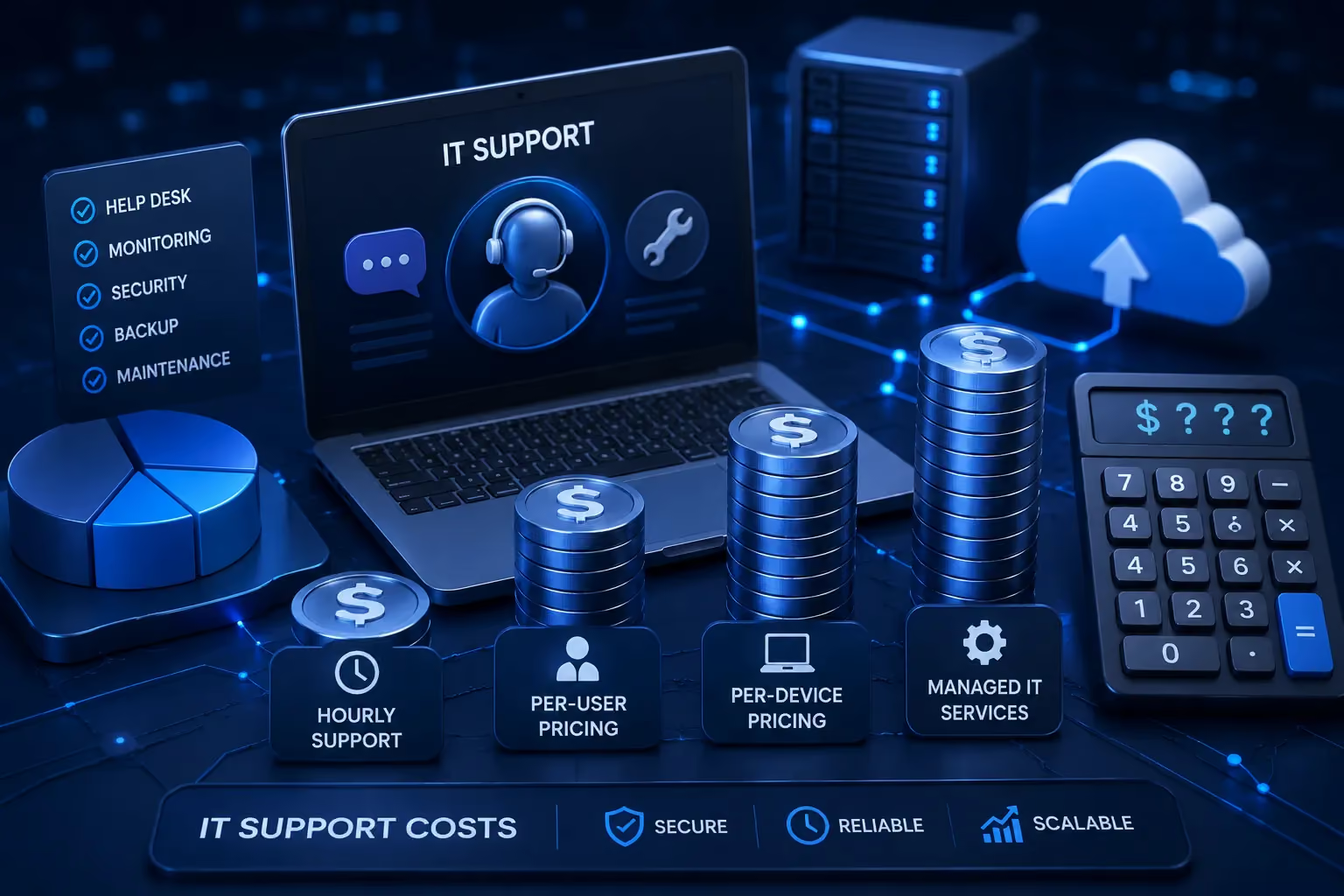
Because of this, IT providers often offer different pricing models to fit various business needs and budgets.
1. Hourly IT Support
Hourly support is a flexible option where businesses only pay when technical issues occur. Rates typically range from $75 to $250 per hour depending on the provider, service complexity, and response time.
This model is often suitable for:
However, costs can become unpredictable if problems happen frequently.
2. Monthly Managed IT Services
Managed IT services usually come with a fixed monthly fee that covers ongoing support and system maintenance.
Services often include:
Monthly pricing can range from a few hundred to several thousand dollars depending on business size and infrastructure complexity.
This model helps businesses maintain predictable IT expenses while reducing downtime and security risks.
3. Per-User Pricing
Some providers charge a monthly fee for each employee who uses IT services. Pricing commonly ranges from $100 to $250 per user per month.
This approach works well for:
4. Per-Device Pricing
Under this model, businesses pay based on the number of devices being managed, such as computers, servers, or network equipment.
Typical pricing may include:
This option is often used by businesses with shared devices or more infrastructure-focused IT needs.
Actual pricing may vary depending on cybersecurity requirements, cloud infrastructure, support availability, and compliance needs.
In many cases, businesses that invest in proactive IT support can reduce long-term costs by preventing downtime, security incidents, and expensive system failures.
IT support pricing is not determined by a single fixed number. Every business has different operational needs, technologies, security requirements, and support expectations, which means service costs can vary significantly from one company to another. Understanding the factors that influence IT support pricing can help businesses choose a solution that balances both performance and budget.
Some of the biggest factors that affect IT support costs include:
While lower-cost IT support may seem attractive at first, businesses should also consider the long-term value of reliable service, proactive maintenance, and strong security protection. In many cases, investing in higher-quality IT support can help reduce downtime, prevent costly technical issues, and improve overall operational efficiency.
One of the biggest decisions businesses face when managing technology operations is whether to build an internal IT team or outsource support to a third-party provider. While both options can help maintain systems and resolve technical issues, the overall costs, scalability, and long-term value can be very different.
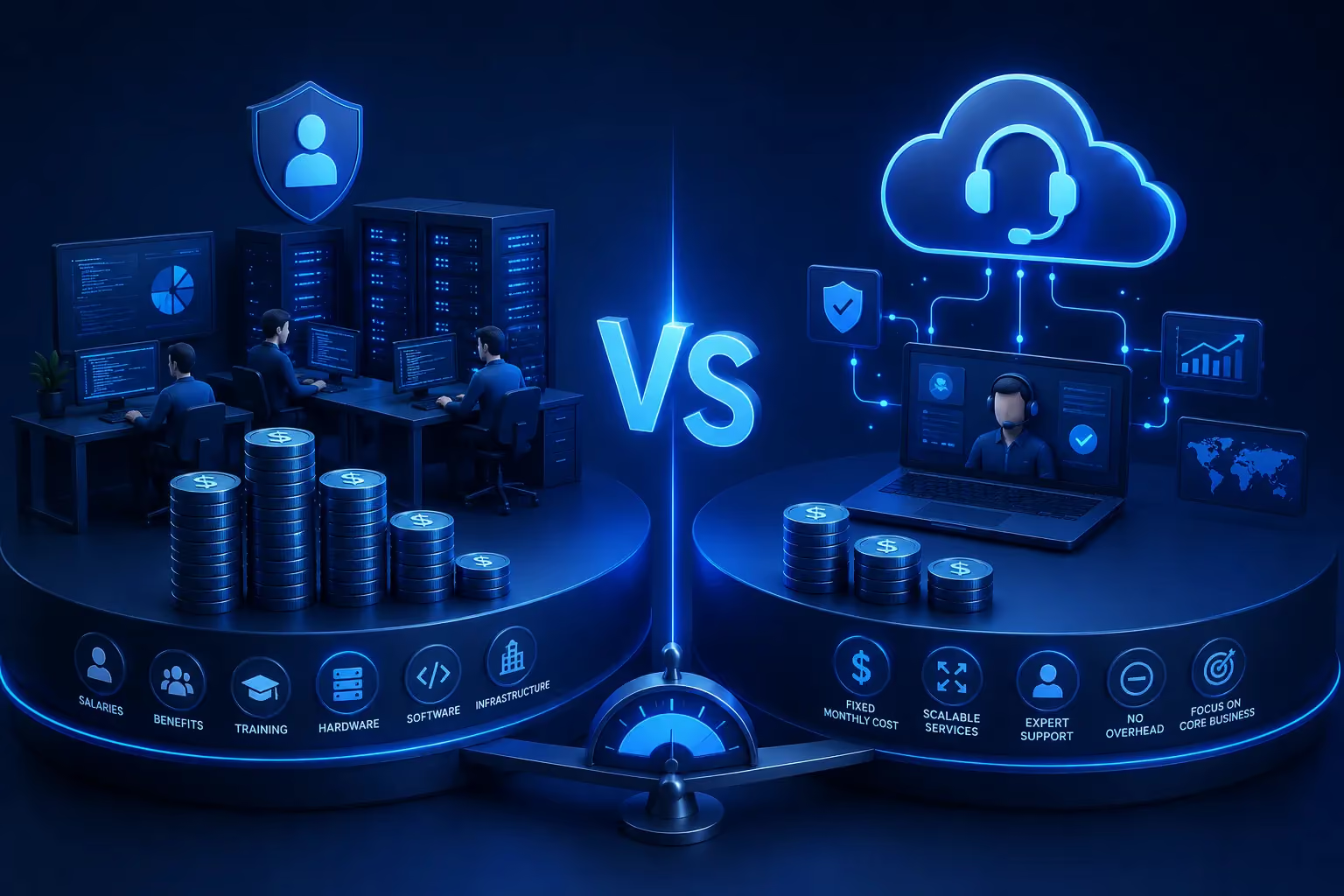
Choosing the right approach often depends on business size, operational complexity, budget flexibility, and internal technical requirements.
Businesses that build an in-house IT department typically need to cover:
For larger enterprises with highly customized infrastructure, an internal IT team may offer more direct control and faster on-site support. However, maintaining a skilled internal department can become expensive, especially for small and mid-sized businesses.
Outsourced IT support is often considered a more cost-effective solution because businesses gain access to experienced specialists without the overhead costs of full-time employees. Many managed service providers also offer proactive monitoring, cybersecurity management, cloud support, and scalable service packages under predictable monthly pricing.
Choosing the right IT support provider is not only about finding the lowest price. Businesses should look for a partner that can deliver reliable support, strong security practices, fast response times, and scalable solutions that align with long-term growth goals.
When evaluating an IT support provider, consider factors such as:
It is also important to choose a provider that understands your industry challenges and can offer flexible support models based on your operational needs.
For businesses looking for reliable outsourced technical support, Serdao offers scalable Technical Support services designed to help companies improve system stability, reduce downtime, and optimize IT operations. Their services can support businesses that need responsive IT assistance without the overhead costs of maintaining a large in-house IT team.
A strong IT support provider should function as more than just a troubleshooting service. The right partner can help businesses improve efficiency, strengthen cybersecurity, and build a more stable technology foundation for long-term success.
Conclusion
The cost of IT support can vary widely depending on business size, infrastructure complexity, security requirements, and the level of service needed. While some companies may prefer low-cost reactive support, many businesses discover that investing in proactive IT services can significantly reduce long-term expenses related to downtime, cybersecurity incidents, and system failures.
Choosing between in-house IT and outsourced support is not simply about finding the cheapest option. The real goal is to balance cost, efficiency, scalability, and service quality in a way that supports sustainable business growth.