


March 10, 2026
March 10, 2026
When IT issues go beyond simple password resets or basic troubleshooting, who steps in to solve the problem? This is where Level 2 Support plays a critical role. Acting as the technical backbone between frontline help desks and specialized engineering teams, Level 2 support ensures that complex incidents are diagnosed accurately and resolved efficiently.
In modern IT environments where downtime directly impacts productivity and revenue, understanding how Tier 2 support functions is no longer optional, it’s strategic. In this article, we’ll break down what Level 2 Support really means, explore its core responsibilities, and examine real-world examples that show why it’s essential for business continuity and scalable IT operations.
In a structured IT service model, Level 2 Support (also known as Tier 2 Support) is the second line of technical assistance responsible for handling issues that cannot be resolved by Level 1. While Level 1 focuses on basic troubleshooting and common user problems, Level 2 deals with more complex, technical incidents that require deeper system knowledge, diagnostic skills, and access privileges.
At its core, Level 2 Support acts as the bridge between frontline support teams and high-level engineering or development units. When a ticket is escalated from Level 1, it usually means the issue involves advanced configuration errors, recurring system faults, software bugs, network misconfigurations, or performance degradation that cannot be solved using standard scripts or knowledge base articles.
Unlike Level 1 agents who follow predefined troubleshooting workflows, Level 2 engineers are expected to perform root cause analysis. They investigate logs, analyze system behavior, replicate issues in controlled environments, and apply targeted fixes. Their goal is not just to restore functionality quickly, but to understand why the issue occurred and prevent it from happening again.
Level 2 Support typically works within an IT Service Management (ITSM) framework, where incident categorization, escalation procedures, and Service Level Agreements (SLAs) are clearly defined. They may also collaborate closely with infrastructure teams, cybersecurity specialists, DevOps engineers, or software developers when a problem requires code-level fixes or architectural changes.
In many organizations, Level 2 Support professionals possess stronger technical expertise than Level 1, including knowledge of server environments, databases, APIs, network protocols, operating systems, and enterprise applications. They may have administrative access to systems, enabling them to modify configurations, deploy patches, or optimize performance settings.
Ultimately, Level 2 Support is not just a reactive troubleshooting team. It plays a strategic role in maintaining system stability, reducing downtime, improving escalation efficiency, and ensuring business operations continue without disruption. Without a well-structured Level 2 function, organizations often experience bottlenecks, prolonged outages, and increased pressure on senior engineering teams.
In short, Level 2 Support is the technical problem-solving engine that keeps modern IT environments running smoothly when issues move beyond the basics.
Once an issue moves beyond basic troubleshooting, Level 2 Support becomes the technical engine that drives deeper investigation and resolution. Their responsibilities go far beyond simply “fixing problems”, they ensure system stability, reduce recurring incidents, and maintain operational efficiency across the organization.
One of the primary responsibilities of Level 2 Support is handling complex incidents that require deeper technical expertise. These may include application crashes, server-side errors, database inconsistencies, integration failures, or network performance issues.
Unlike Level 1, which follows predefined scripts, Level 2 engineers analyze logs, examine system configurations, review error codes, and test different scenarios to isolate the root cause. Their approach is analytical and investigative, often requiring cross-platform knowledge and hands-on system access.
Resolving an incident is important, but preventing it from recurring is even more critical. Level 2 Support performs root cause analysis (RCA) to identify why an issue occurred in the first place.
This may involve:
By addressing the underlying cause instead of applying temporary fixes, Level 2 helps improve long-term system reliability and reduce ticket volume over time.
Not all issues can be solved at the Tier 2 level. When problems involve code defects, architectural flaws, or require product redesign, Level 2 escalates them to Level 3 or engineering teams.
However, escalation is not simply “passing the ticket along.” Level 2 must:
This structured escalation process ensures faster resolution and prevents unnecessary back-and-forth communication.
Level 2 Support often has administrative access to enterprise systems. This enables them to:
Their proactive involvement helps maintain system health and ensures IT infrastructure operates efficiently under changing business demands.
Modern IT environments are interconnected. A single issue may involve networks, cloud platforms, security policies, and application layers simultaneously. Level 2 Support acts as a coordination point between different technical teams.
They communicate with:
This cross-functional collaboration reduces resolution time and ensures technical consistency across departments.
Another often overlooked responsibility is knowledge management. After resolving incidents, Level 2 Support documents solutions and updates internal knowledge bases. This helps:
Over time, this continuous improvement process strengthens the entire IT support level structure.
Understanding theory is helpful, but seeing Level 2 Support in action makes its value truly clear. In real-world IT environments, Tier 2 teams handle incidents that require technical depth, structured analysis, and cross-team collaboration. Below are three detailed examples that demonstrate how Level 2 Support operates beyond basic troubleshooting and delivers measurable impact.
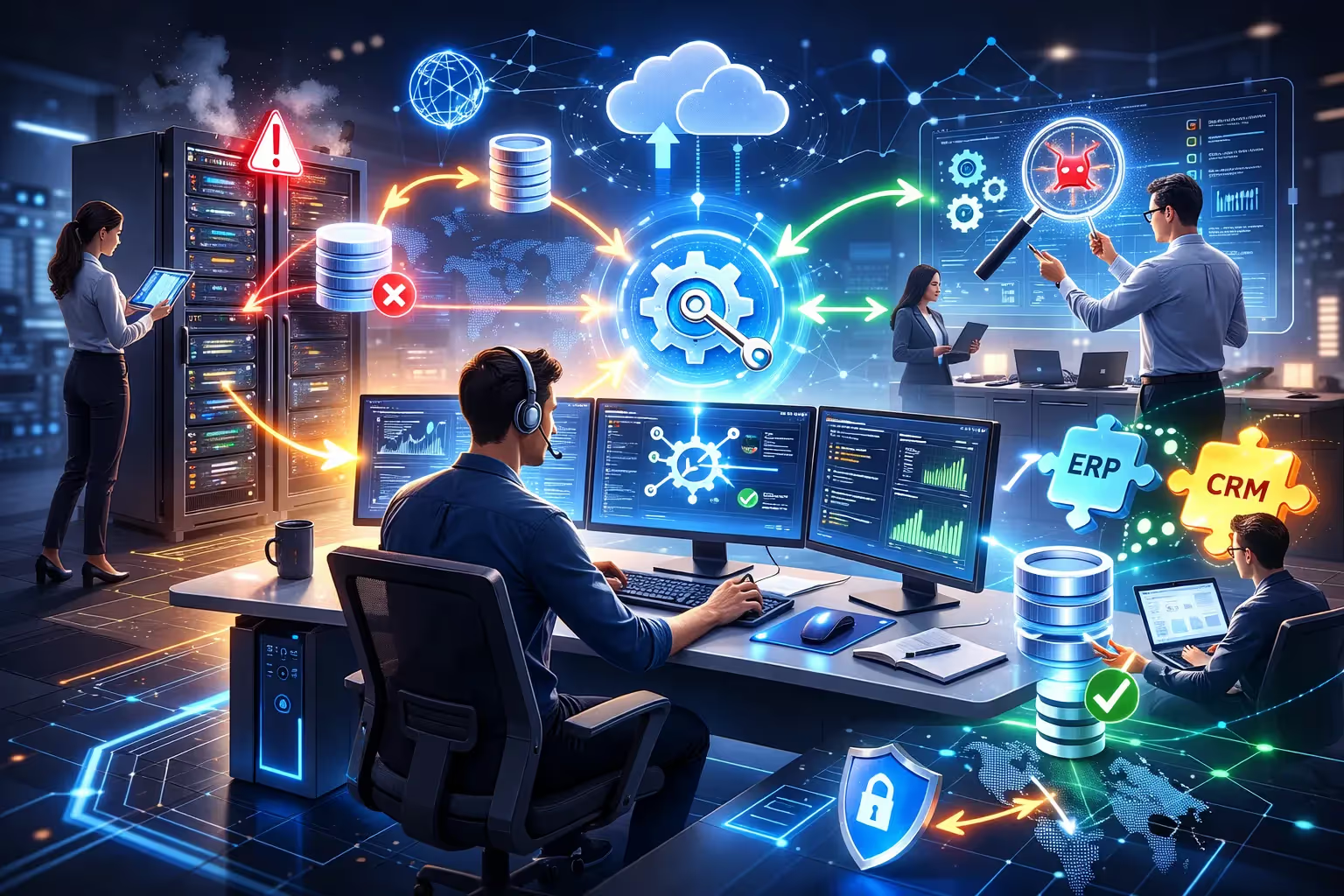
Imagine a company’s internal CRM system suddenly starts crashing whenever users attempt to generate reports. Level 1 has already confirmed that the issue is not related to user permissions, browser settings, or basic configuration errors. The ticket is escalated.
At this point, Level 2 Support begins a structured technical investigation:
Instead of simply restarting the system (a temporary fix), Level 2 adjusts the database configuration, restores the optimized query parameters, and monitors performance metrics to ensure stability.
The result? System functionality is restored, report generation speed improves, and the risk of recurring failures is significantly reduced.
This example highlights a key difference: Level 2 doesn’t just restore service, it diagnoses, validates, and stabilizes the system to protect long-term business operations.
In another scenario, multiple employees report intermittent disconnections from a cloud-based collaboration platform. Level 1 verifies that local devices and internet connections are functioning properly, yet the issue persists.
Once escalated, Level 2 Support takes a deeper infrastructure-level approach:
By correcting the QoS configuration and rebalancing bandwidth allocation, Level 2 eliminates the instability.
The outcome is not only restored connectivity but also improved network optimization across the organization.
This case demonstrates how Level 2 operates at a systems level, addressing root infrastructure issues that frontline teams simply do not have the access or expertise to manage.
Modern enterprises rely heavily on integrated systems: ERP, CRM, HR platforms, payment gateways, and external APIs. When integrations fail, the impact can ripple across departments.
Consider a situation where customer orders are not syncing correctly between an eCommerce platform and the company’s ERP system. Level 1 confirms the data input is correct but cannot determine why synchronization is failing.
Level 2 Support steps in with a more advanced diagnostic process:
After applying the configuration correction and testing synchronization in a controlled environment, order data begins flowing correctly again.
Beyond fixing the immediate issue, Level 2 also updates documentation and recommends monitoring alerts for token failures to prevent future disruptions.
This example showcases how Level 2 acts as a technical integrator, ensuring that interconnected systems function reliably within complex digital ecosystems.
Across these examples, application failures, network disruptions, and system integration breakdowns, one theme remains consistent: Level 2 Support provides depth, precision, and strategic problem-solving.
While Level 1 resolves common issues and Level 3 addresses product-level engineering challenges, Level 2 operates in the critical middle ground where advanced troubleshooting, system knowledge, and cross-functional coordination intersect.
As organizations grow, their IT environments naturally become more complex. What once worked with a small support structure can quickly become insufficient when systems scale, users increase, and digital operations expand. Strengthening the Level 2 Support team is not merely a defensive move, it is often a strategic investment in operational stability and long-term growth.
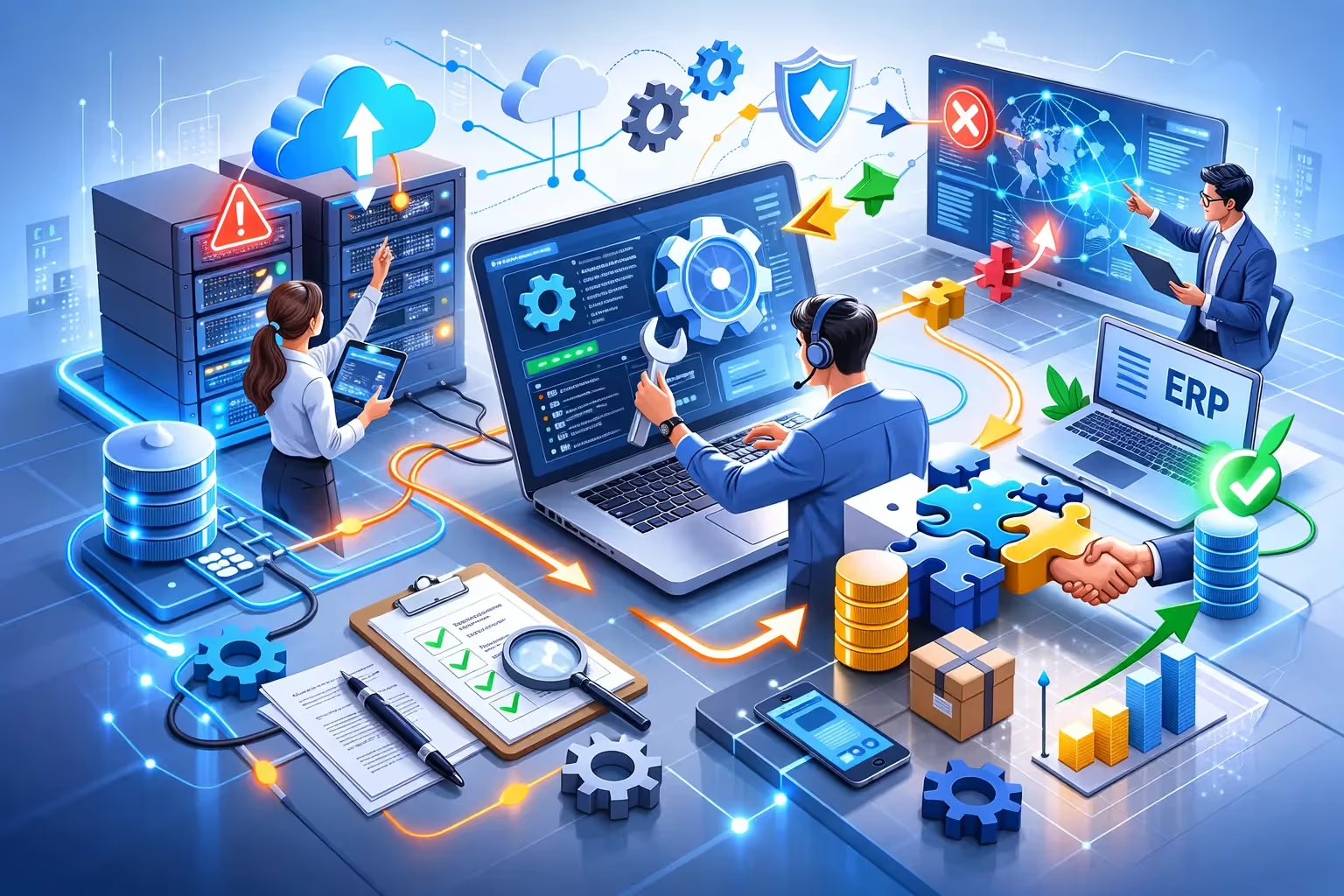
One clear sign is a rising volume of escalated tickets from Level 1. If frontline support frequently encounters issues they cannot resolve, and escalation queues begin to grow, it indicates a gap in technical capacity. Prolonged resolution times, repeated back-and-forth between tiers, or increasing SLA breaches are strong indicators that the Level 2 team may be understaffed or lacking specialization.
Another critical moment comes during rapid business expansion. Whether launching new digital products, entering new markets, or onboarding large numbers of employees, IT complexity increases significantly. New integrations, cloud migrations, cybersecurity layers, and enterprise applications introduce additional failure points. Without a robust Level 2 team capable of handling advanced diagnostics and configuration challenges, system instability can undermine growth initiatives.
Recurring technical issues are also a warning sign. If the same problems continue appearing despite being “resolved,” it suggests insufficient root cause analysis. Strengthening Level 2 Support enables deeper investigation, proactive system optimization, and the development of preventive solutions rather than temporary fixes.
Businesses undergoing digital transformation should pay particular attention. Implementing ERP systems, cloud-native infrastructure, DevOps pipelines, or API-driven architectures requires stronger mid-tier technical expertise. Level 2 professionals play a crucial role in bridging operational IT support and engineering teams during these transitions, ensuring new systems function reliably from day one.
Finally, customer experience metrics can reveal the need for reinforcement. Increased downtime, slower response times, or declining user satisfaction often trace back to bottlenecks in technical troubleshooting. Investing in a stronger Level 2 function improves incident resolution speed, reduces operational disruption, and enhances overall service reliability.
In essence, businesses should not wait for system failures to force action. Strengthening Level 2 Support at the right time ensures scalability, resilience, and smoother digital operations, transforming IT support from a reactive necessity into a strategic advantage.
Conclusion
IT support is no longer just a back-office function, it is a critical pillar of business performance. Among the different support tiers, Level 2 Support stands out as the technical backbone that ensures complex issues are handled with precision, speed, and long-term stability in mind.
From advanced troubleshooting and root cause analysis to infrastructure optimization and cross-team collaboration, Tier 2 professionals operate in the space where operational continuity is either protected or put at risk. They bridge the gap between frontline assistance and high-level engineering, ensuring that incidents are not only resolved, but fully understood and prevented from recurring.
For growing organizations, investing in a strong Level 2 Support structure is not simply about handling more tickets. It is about reducing downtime, improving SLA performance, strengthening system reliability, and enabling scalable digital transformation.